
 Shop
Shop Pay Bill
Nummular Eczema: Symptoms, Triggers, and How to Treat It
Quick Answer: Nummular eczema, also called discoid eczema, is a form of eczema that causes round or oval, coin-shaped patches of irritated skin that itch, ooze, and crust over. It is not contagious, and it is not ringworm, though the two are commonly confused. Flare-ups are often triggered by dry skin, skin injuries, harsh products, or environmental changes. Treatment typically involves topical corticosteroids, moisturizers, and identifying personal triggers. If patches are spreading, infected, or not responding to over-the-counter care, our dermatology providers can help put together a more targeted plan.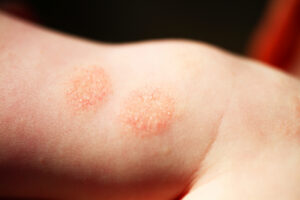
Those coin-shaped patches can be alarming the first time you see them. They itch intensely, they look inflamed, and many people’s first instinct is to wonder whether it’s contagious. The good news: it isn’t. Nummular eczema is a manageable skin condition, but it does tend to be stubborn without the right approach.
Here’s a clear look at what nummular eczema is, how to recognize it, what sets it off, and how to treat it effectively. If you’ve been dealing with recurring or worsening patches, our eczema treatment team is here to help.
What Is Nummular Eczema?
Nummular eczema, also known as discoid eczema or nummular dermatitis, is a chronic inflammatory skin condition characterized by round, coin-shaped lesions. The name comes from the Latin word “nummulus,” meaning small coin, which describes the shape of the patches almost exactly.
Unlike atopic dermatitis, which is the most common form of eczema and is closely linked to allergies and asthma, nummular eczema often develops in people without a personal or family history of eczema. It can affect anyone but tends to appear more frequently in middle-aged and older adults, particularly men. A second, smaller peak occurs in younger women.
The patches can appear anywhere on the body but most commonly show up on the arms, legs, torso, and hands. They can come and go over months or even years, and they often recur in the same spots.
Symptoms of Nummular Eczema
Nummular eczema has a fairly recognizable pattern once you know what to look for. Early-stage nummular eczema often starts as a cluster of small red spots or blisters that quickly merge into a coin-shaped patch.
Common symptoms include:
- Round or oval patches: Typically 1 to 4 centimeters in diameter, clearly defined edges
- Intense itching: Often worse at night and can disrupt sleep
- Weeping or oozing: In the early, active phase, patches may leak clear or yellow fluid
- Crusting: As fluid dries, patches develop a scab-like crust on the surface
- Dry, scaly texture: Once the acute phase settles, patches often become dry and flaky
- Skin discoloration: Patches may leave a lighter or darker mark on the skin even after healing
- Burning or stinging: Some people feel a burning sensation in addition to itching
Mild nummular eczema may present as just one or two patches, while more widespread cases can involve dozens of lesions across the body.
Nummular Eczema vs. Ringworm: How to Tell the Difference
This is one of the most common points of confusion, and it’s worth addressing directly. Both conditions produce round patches on the skin, but they are completely different in cause, appearance, and treatment.
| Nummular Eczema | Ringworm (Tinea Corporis) | |
|---|---|---|
| Cause | Inflammatory skin condition | Fungal infection |
| Contagious? | No | Yes |
| Patch appearance | Solid, filled-in patches that ooze or crust | Ring-shaped with a clearer center |
| Texture | Wet, weeping, or dry and scaly | Scaly border, often with raised edges |
| Itching | Intense, often constant | Moderate, sometimes mild |
| Treatment | Corticosteroids, emollients | Antifungal creams or oral medication |
The key visual difference is the center. Ringworm typically clears in the middle as it spreads outward, creating a ring shape. Nummular eczema patches stay filled in throughout. That said, if you’re unsure which you’re dealing with, it’s worth getting a proper diagnosis. Applying a corticosteroid cream to ringworm can make a fungal infection significantly worse.
What Causes Nummular Eczema?
The exact cause of nummular eczema isn’t fully understood, but research points to a combination of a compromised skin barrier and environmental or internal triggers. People with nummular eczema tend to have skin that loses moisture more easily, which leaves it more vulnerable to irritation and inflammation.
Common causes and contributing factors include:
- Dry skin: One of the most consistent risk factors, particularly in older adults whose skin naturally produces less oil
- Skin injury: A cut, scrape, insect bite, or chemical burn can trigger a nummular eczema patch at the site of the injury
- Dry climate or cold weather: Low humidity pulls moisture from the skin and can trigger or worsen flares
- Harsh soaps and detergents: Products with fragrances, sulfates, or strong preservatives disrupt the skin barrier
- Certain medications: Some medications, including blood pressure medications, interferon and ribavirin used to treat hepatitis C, have been linked to nummular eczema
- Contact with irritants or allergens: Metals like nickel, formaldehyde in household products, or other contact allergens can trigger patches
- Atopic dermatitis history: People with a history of eczema or contact dermatitis have a higher risk
- Stress: Psychological stress is a known flare trigger across most forms of eczema
Common Nummular Eczema Triggers
Even once a flare has resolved, the skin remains prone to recurrence. Knowing your personal triggers is one of the most effective ways to reduce how often patches come back.
Frequent triggers include:
- Hot showers or baths that strip the skin’s natural oils
- Wool or synthetic fabrics worn directly against the skin
- Household cleaning products, especially those with fragrances or bleach
- Sudden changes in temperature or humidity
- Sweating followed by skin dryness
- Alcohol consumption, which can cause flushing and dry out the skin
- Nickel exposure from jewelry, belt buckles, or watchbands
- Over-washing or scrubbing the skin
Keeping a simple log of when flares occur and what may have preceded them can help you and your dermatologist or dermatology provider identify patterns that aren’t immediately obvious.
How to Treat Nummular Eczema
Treatment for nummular eczema usually involves a combination of repairing the skin barrier, reducing inflammation, and managing itch. The right approach depends on how widespread the patches are, how severe the symptoms are, and how long they’ve been present.
Moisturizers and Emollients
Consistent, heavy moisturizing is the foundation of any nummular eczema routine. Thick creams and ointments, particularly those containing ceramides, are more effective than light lotions because they do a better job sealing in moisture and reinforcing the skin barrier. Applying moisturizer immediately after bathing, while the skin is still slightly damp, helps lock in hydration.
Topical Corticosteroids
Prescription-strength topical corticosteroids are the most common first-line treatment for active nummular eczema patches. They reduce inflammation and relieve itching quickly. The strength prescribed depends on the location and severity of the patches. These are generally used for short courses to manage flares rather than as long-term daily treatments.
Topical Calcineurin Inhibitors
For areas where corticosteroids aren’t ideal, such as the face or skin folds, topical calcineurin inhibitors like tacrolimus or pimecrolimus offer a non-steroidal option to reduce inflammation without the side effects associated with long-term steroid use.
Antihistamines
Oral antihistamines can help manage the intense itching that comes with nummular eczema, particularly at night. They don’t treat the underlying inflammation but can provide enough relief to prevent scratching that worsens patches or introduces infection.
Antibiotics
If patches become infected, which can happen when broken skin is exposed to bacteria, a short course of oral or topical antibiotics may be needed before other treatments can work effectively. Signs of infection include increased redness, warmth, swelling, or yellow crusting that doesn’t improve.
Phototherapy
For widespread or stubborn nummular eczema that doesn’t respond to topical treatments, narrowband UVB phototherapy is an option. It uses controlled doses of ultraviolet light to calm inflammation across larger areas of the body. This is typically offered in a dermatology office setting.
Wet Wrap Therapy
During particularly severe flares, wet wrap therapy, which involves applying a diluted topical corticosteroid and then layering damp bandages over the patches, can help soothe skin and boost the absorption of the medication.
Systemic Therapy
Medications (oral or injectable) have become available to treat various forms of eczema internally. Your dermatologist or dermatology provider can assess the severity of your rash/itching and help work with you to decide if any of these may be appropriate.
When to See a Dermatologist for Nummular Eczema
Some cases of nummular eczema resolve with consistent at-home care, but many do not, especially without identifying and avoiding the underlying triggers. It’s worth seeing a dermatologist or dermatology provider if:
- Patches are not improving after two weeks of OTC treatment
- The affected area is spreading or new patches are appearing frequently
- Patches look infected (increased redness, warmth, oozing, or crusting that isn’t clearing)
- Itching is severe enough to disrupt sleep or daily activities
- You’re unsure whether you’re dealing with eczema, ringworm, or another condition
- Flares keep coming back despite your best efforts to manage them
Getting a confirmed diagnosis is especially important if you’ve been self-treating for what you thought was ringworm with antifungal products. Treating eczema as if it were a fungal infection, or vice versa, won’t work and can make things worse.
Find Relief From Nummular Eczema at Schweiger Dermatology Group
At Schweiger Dermatology Group, our dermatology providers see all forms of eczema regularly, including nummular eczema cases that have been hard to control. We can confirm your diagnosis, identify your personal triggers, and build a treatment plan based on how your skin is actually behaving, not a one-size-fits-all approach.
We have locations throughout New York, New Jersey, Pennsylvania, and more, with same- and next-day appointments commonly available. Schedule an appointment today, or call us at 844-DERM-DOC.
FAQs
What does nummular eczema look like?
Nummular eczema appears as round or oval, coin-shaped patches of irritated skin. In the early stages, patches are often red, raised, and may ooze or blister. Over time they can become dry, scaly, and crusty. The patches are typically well-defined and can range from about 1 to 4 centimeters in diameter.
Is nummular eczema contagious?
No. Nummular eczema is an inflammatory skin condition, not an infection. It cannot be passed from person to person through skin contact. Ringworm, which can look similar, is contagious because it is caused by a fungus.
What triggers nummular eczema?
Common triggers include dry skin, cold or low-humidity weather, harsh soaps and detergents, skin injuries, contact with irritants like nickel or fragrances, hot showers, and stress. Identifying your personal triggers can help reduce how often flares occur.
How long does nummular eczema last?
Individual patches can take weeks to months to heal with proper treatment. Without treatment, they can persist much longer. Nummular eczema is also a condition that tends to recur, meaning patches may come back in the same spots over time, particularly if triggers aren’t managed.
Can nummular eczema go away on its own?
Mild cases sometimes resolve on their own, particularly if a specific trigger like a new soap or detergent is identified and removed. More persistent or widespread cases typically need treatment to clear and prevent recurrence.
How do I tell nummular eczema apart from ringworm?
Ringworm tends to form a ring with a clearer center as it spreads outward, while nummular eczema patches stay filled in throughout. Ringworm is caused by a fungus and is contagious; nummular eczema is not. If you’re uncertain, a dermatologist or dermatology provider can diagnose the condition accurately, which matters because the treatments are completely different.
What is the best treatment for nummular eczema?
Treatment typically combines heavy moisturizers to repair the skin barrier with prescription topical corticosteroids to reduce inflammation during flares. Identifying and avoiding personal triggers is just as important as medication. For widespread or persistent cases, phototherapy or other in-office options may be recommended.
Is discoid eczema the same as nummular eczema?
Yes. Discoid eczema and nummular eczema are two names for the same condition. “Nummular” comes from the Latin word for coin and describes the shape of the patches. “Discoid” refers to the disc-like shape of the lesions.
