
Skin Cancer Is the Most Common Cancer in the U.S.
Here’s What You Need to Know in 2026
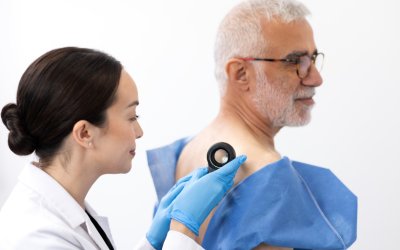 Skin cancer is the most common cancer in the United States — more common than all other cancers combined. About 1 in 5 Americans will develop skin cancer in their lifetime, and approximately 9,500 people are diagnosed every single day. The good news: when caught early, skin cancer is one of the most treatable cancers there is. The challenge is that too many cases are still caught too late.
This May, during Skin Cancer Awareness Month, we want to give you the facts, the warning signs, and the practical steps that can genuinely protect your health.
How Common Is Skin Cancer?
Skin cancer is far more prevalent than most people realize. An estimated 234,680 new cases of melanoma — the deadliest form — will be diagnosed in the U.S. in 2026 alone, a 10.6% increase over last year’s projections according to the American Cancer Society. Of those, 112,000 are expected to be invasive. Add in the millions of annual diagnoses of basal cell carcinoma and squamous cell carcinoma, and the scale becomes clear: skin cancer is a public health issue that touches nearly every family.
“We are seeing an uptick in diagnosis of melanoma, and the trend is, unfortunately, not surprising. The good news is that most of these melanomas are found at an early stage, making them more treatable.”
Who is at Risk?
Skin cancer can develop in anyone — regardless of age, gender, or skin tone. In 2026, invasive melanoma is projected to be the fourth most commonly diagnosed cancer in men and the fifth most common in women. Certain factors increase individual risk:
- A history of sunburns, especially blistering burns in childhood
- Frequent or prolonged UV exposure from the sun or tanning beds
- A personal or family history of skin cancer
- A large number of moles or atypical (unusual-looking) moles
- Fair skin, light eyes, or a tendency to freckle
- Weakened immune system or certain genetic conditions
“Many patients may not recognize the cumulative effect of UV rays from being outdoors for many hours daily. In addition, those with fair skin, light eyes, and freckles may not appreciate their overall increased risk of skin cancer over their lifetime.”
Can People with Darker Skin Get Skin Cancer?
Yes, and this is one of the most important misconceptions to correct. While people with darker skin tones have a lower statistical likelihood of developing melanoma, they are significantly more likely to be diagnosed at a later, harder-to-treat stage. This disparity exists partly because skin cancer in darker skin often looks different and can appear in less sun-exposed areas like the palms, soles of the feet, or under the nails — locations that patients and even some providers may not think to check. No skin tone is immune to skin cancer, and everyone benefits from regular professional screening.
What Does Skin Cancer Look Like?
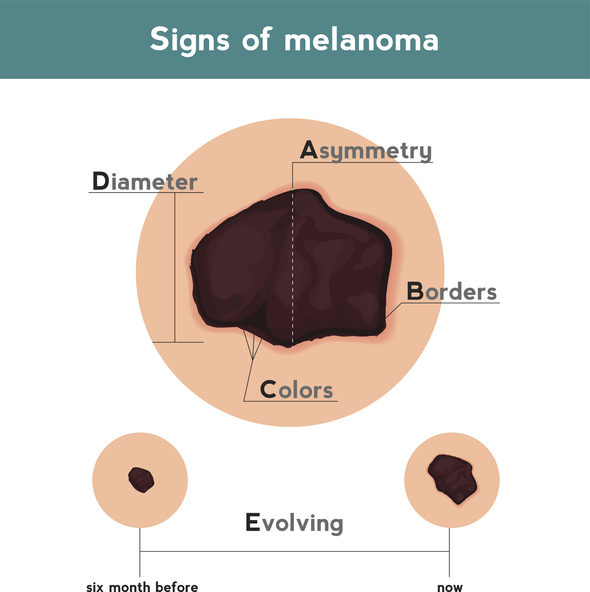 Skin cancer doesn’t always look dramatic. Many lesions are subtle, easy to dismiss, and don’t cause pain in their early stages. Knowing what to look for is one of the most valuable things you can do for your health.
For melanoma, dermatologists use the ABCDE guide:
- Asymmetry — one half of the spot doesn’t match the other
- Border — edges are irregular, ragged, notched, or blurred
- Color — uneven shading, or multiple colors within the same spot (brown, black, red, white, or blue)
- Diameter — larger than 6mm (about the size of a pencil eraser), though melanomas can be smaller
- Evolving — any change in size, shape, color, or new symptoms like itching or bleeding
For non-melanoma skin cancers like basal cell carcinoma (BCC) and squamous cell carcinoma (SCC), warning signs can look quite different:
- A pearly, waxy, or flesh-colored bump on sun-exposed skin
- A flat, pink or red scaly patch that won’t go away
- A sore that bleeds, scabs over, heals, and then returns
- A rough or thickened patch of skin, especially on the lips, ears, or hands
- A “pimple” that persists for more than a few weeks
How to Prevent Skin Cancer
Most skin cancers are caused by UV radiation — which means most are preventable. Building these habits into your daily routine significantly reduces your risk:
- Apply a broad-spectrum SPF 30 or higher sunscreen every day, even on cloudy days
- Reapply sunscreen every two hours when outdoors, and after swimming or sweating
- Wear UPF-rated clothing, wide-brimmed hats, and UV-blocking sunglasses
- Seek shade during peak UV hours, typically 10am to 4pm
- Never use tanning beds — even one session before age 35 raises melanoma risk significantly
- Do a monthly head-to-toe self-exam and note any new or changing spots
How Often Should You Get a Skin Check?
For most adults, an annual full-body skin exam with a board-certified dermatologist is the standard recommendation. Higher-risk patients — including those with a personal or family history of skin cancer, a large number of moles, or significant sun exposure history — may benefit from more frequent visits every three to six months. Your dermatologist will help you determine the right schedule based on your individual risk profile. When in doubt, more often is better.
Why Early Detection Makes Such a Difference
The stage at which skin cancer is caught has a profound impact on treatment. Melanoma detected at an early, localized stage has a near-100% five-year survival rate. As the cancer advances and spreads to lymph nodes or distant organs, that rate drops significantly — and treatment becomes more complex, more aggressive, and harder on the patient.
Early-stage skin cancers are typically treated with a minor in-office procedure — often a simple excision or Mohs surgery. Advanced disease may require systemic therapies, radiation, or combination treatment. The earlier a cancer is identified, the more options a patient has, and the less invasive those options tend to be.
“As therapies for melanoma have evolved, early detection has become even more vital. New advances in genomic testing can identify which patients have a higher risk of their melanoma spreading, which can affect decisions in treatment. Immunotherapies have led to significant improvement in survival rates in those being treated with more advanced melanoma. However, the best outcomes all start with being examined and having any potential melanoma identified as early as possible.”
Newer Treatments Giving Patients More Hope in 2026
For patients diagnosed with advanced melanoma, the treatment landscape in 2026 looks dramatically different than it did a decade ago. Key advances include:
- Immunotherapy — drugs that harness the body’s own immune system to recognize and attack cancer cells. Checkpoint inhibitors have produced long-term remission in patients who previously had few options.
- Targeted therapy — for patients whose melanoma carries a BRAF gene mutation (roughly half of all metastatic cases), targeted drugs can block the specific pathway driving cancer growth.
- Genomic testing — advanced molecular profiling can now identify patients at higher risk of recurrence, helping dermatologists and oncologists make more personalized treatment decisions.
- Tumor-infiltrating lymphocyte (TIL) therapy — FDA-approved in 2024, this personalized cell therapy harvests immune cells directly from a patient’s tumor and re-engineers them to fight cancer more effectively.
These advances make a compelling case for early diagnosis: the sooner skin cancer is found, the more of these tools are on the table.
When to See a Dermatologist
Don’t wait for your next scheduled appointment if you notice any of the following:
- A mole or spot that is changing in size, shape, or color
- A new growth or lesion that looks different from your other spots
- A sore that bleeds or does not heal within a few weeks
- A spot that itches, crusts, or becomes painful
- Any skin change that simply doesn’t look or feel right to you
Trust your instincts. A quick visit for a spot that turns out to be benign is always worth the peace of mind — and the stakes of waiting on something malignant are too high.
Still not convinced you need that appointment? Dr. Miller has a simple message:
“Go! The exam is relatively quick, non-invasive, and may be life-saving. Finding a melanoma early significantly improves survival rates and often makes the treatment regimen more effective. In addition, other skin issues may be identified or discussed during the visit, which can lead to overall improvement in skin health.”
BOOK YOUR SKIN EXAM TODAY
Schedule a full-body skin exam with Schweiger Dermatology to catch potential skin cancer early and protect your long-term skin health. Our board-certified dermatologists are here to give you answers, peace of mind, and the expert care you deserve.
Find a dermatologist near you and book your skin exam.
